What we replace
- Double-hung and single-hung — the most common window in every St. Louis era, from 1890s brick flats to 2010s Wentzville two-stories.
- Casement and awning — including the steel casements in 1950s–60s North and South County ranches, which almost always want full-frame replacement.
- Sliders, picture and fixed units, bays and bows — bay and bow replacement is quoted after the measure visit because the roof and support conditions vary.
- Basement and egress windows — including the sill-height and opening-size rules that apply when a basement bedroom is involved.
Frame materials we install: vinyl, fiberglass, composite, aluminum-clad wood and all-wood, and finished-aluminum historic replicas. If your house is in a City Historic District, the choice narrows to products on the Cultural Resources Office's approved list — see historic district windows.
How the purchase works
- Estimate online. Count your windows, pick a style and material, tell us whether the wall is brick or siding and roughly when the house was built. The instant estimate gives you a range with no email or phone required.
- Shortlist. Read the guides, compare glass packages, decide between insert and full-frame. Nobody calls you during this step unless you ask.
- Send photos and rough sizes. The quote form asks for a photo of each elevation and your worst window, plus rough width and height. Our measuring guide shows what to send.
- One measure visit. A member of our installation crew measures every opening to the sixteenth of an inch, checks the frames for rot and square, confirms the wall type, and notes anything the photos did not show. This is the visit that cannot happen online.
- Written quote, then order. You get the quote in writing. It lists each opening, method, product, glass, and price. Nothing is "only valid today." You approve, we order, and we install when the units arrive — typically four to eight weeks for stock vinyl, eight to fourteen for clad-wood or historic-replica units.
What it costs
| Job | Typical installed range (St. Louis, 2026) |
|---|---|
| Vinyl double-hung, insert, frame wall | $550 – $950 per opening |
| Vinyl double-hung, full-frame, frame wall | $800 – $1,300 |
| Vinyl, insert, brick masonry opening | $700 – $1,200 |
| Fiberglass or composite, full-frame, brick | $1,100 – $1,900 |
| Clad-wood or historic-replica, full-frame, historic district | $1,500 – $2,800 |
| Whole house, 10–14 openings, mixed | $7,000 – $19,000 |
These are our planning bands; the quote is exact. The one widely cited aggregator figure for St. Louis (an average of about $6,278 per project, Angi, October 2026) sits inside that range. What moves a St. Louis price more than anything else, after the count, is the install method and the wall — a full-frame replacement in brick is a different day's work than a vinyl insert in a 1998 frame wall. The cost guide explains every line.
Insert or full-frame?
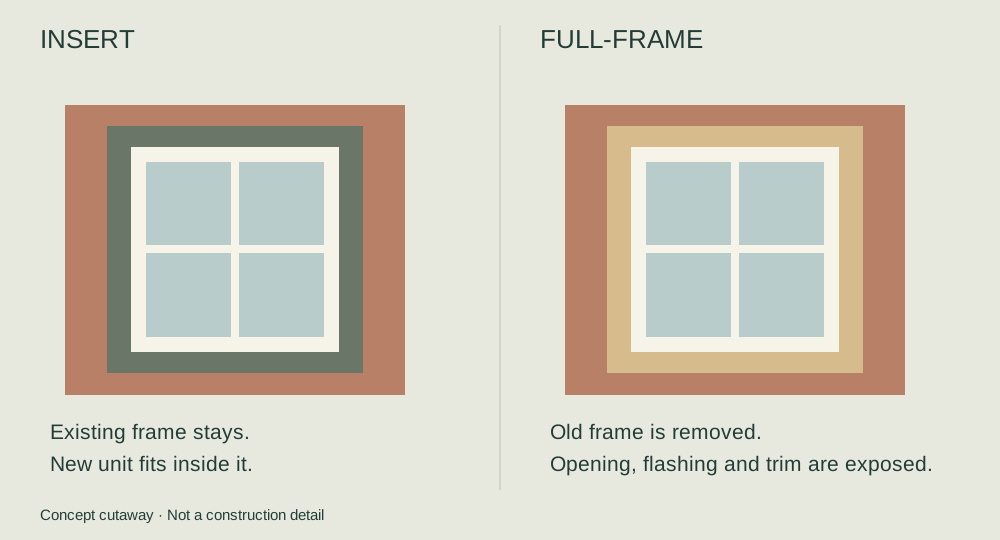
Insert (pocket) replacement sets the new unit inside your existing frame. It is faster, cheaper and keeps the interior trim, and it is the right call when the frame is sound and square — which it usually is in a 1990s frame house and often is in a well-kept pre-war brick house.
Full-frame replacement removes the old frame to the rough opening or the masonry. It is the right call when there is rot, when the frame is out of square, when the old unit is a thin steel or aluminum sash, when you want the weight pockets of an old double-hung insulated, or when you are changing the opening size. It costs more and it is what we recommend more often in St. Louis than in a newer metro, because of the age of the housing. We tell you which we are quoting for every opening and why. More in insert vs. full-frame and full-frame replacement.
What is included
- Removal and disposal of the old windows and sash.
- Lead-safe work practices on pre-1978 houses — containment, HEPA cleanup and cleaning verification — as a listed line item, not a surprise. Window replacement is written out of the RRP minor-repair exemption, so this is not optional on an older house; see lead-safe window replacement.
- Insulation of the gap between unit and opening, exterior sealant, and interior stop or trim replacement where the method requires it.
- Permit handling where a permit applies — in unincorporated St. Charles County at four or more windows, in any municipality that requires one, and the CRO review in City Historic Districts. The permits guide sets out what we verified.
- Cleanup, and a walkthrough of every window's operation and lock before we leave.
What is not included unless quoted
Interior painting of new trim; repair of plaster or drywall damaged by water before we arrived; structural repair of a failed lintel or sill (we will tell you if we find one at the measure); custom exterior trim replication beyond standard brickmould; window treatments.
Timeline
Most whole-house jobs are installed in one to three days. A crew replaces roughly eight to twelve insert windows a day in a frame house; brick full-frame work and lead-safe setup bring that to four to eight. We remove and set one opening at a time, so the house is never open for long, and we work year-round — a January install is normal in St. Louis.
Not ready to talk yet?
Start with the planning layer: the complete St. Louis replacement window guide covers house era, brick, historic rules, lead, permits, glass, cost and the online process in one place.
Frequently asked questions
Do I have to be home for the measure visit? Yes — it is the one visit in the process, and someone needs to let the measurer in to every room with a window.
Can you match my existing windows? Usually, yes. In a historic district we match the original configuration by rule; elsewhere we match the style and grid pattern you have or change it if you want to.
Will you give me a price over the phone? We don't use the phone for sales. The instant estimate gives a range in under a minute, and the written quote follows the measure visit.
What about the window tax credit? It ended for anything installed after December 31, 2025. There is no federal window credit in 2026; see tax credits and rebates.