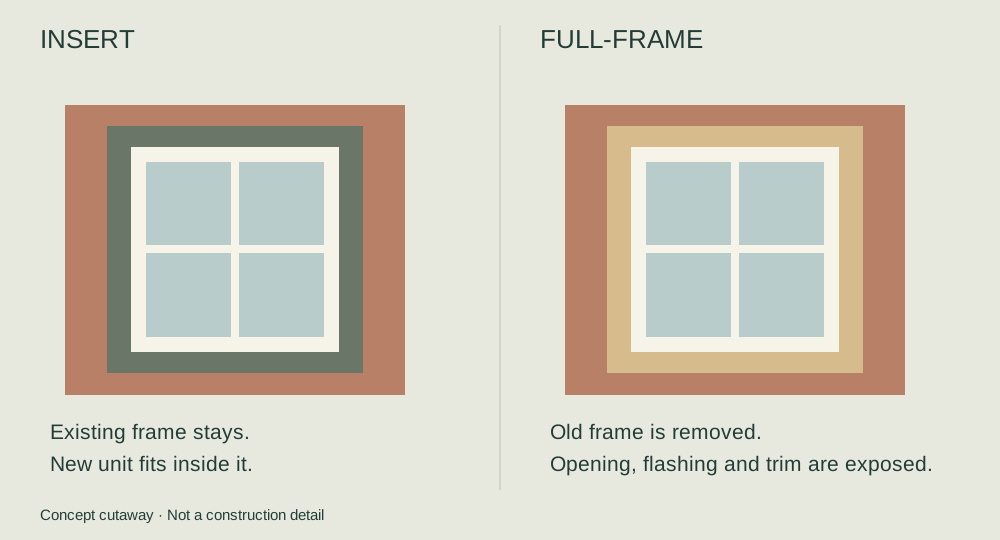
An insert replacement keeps your old window frame and sets a new unit inside it; a full-frame replacement removes the old frame to the rough opening or the brick and starts clean. Insert is cheaper and faster and right for a sound frame; full-frame is right when the frame is the problem — and in St. Louis, with two-thirds of the County and six-sevenths of the City built before 1980, the frame is the problem more often than the national averages suggest.
What is an insert replacement?
The old sash, stops and balances come out; the old frame, sill and exterior trim stay; a new unit built to the inside dimensions of the old frame is set into it. It is shimmed plumb, screwed through its jambs into the old jambs, the gap is foamed, the exterior is sealed, and the interior stop is reinstalled or replaced. Interior casing is untouched; the brickmould on a brick house is untouched.
- Time: a crew does eight to twelve a day in a frame house.
- Cost: the base price in every table on this site.
- Trade-off: you lose about three-quarters of an inch of glass width and height on each side to the new frame inside the old; on a weight-and-pulley window the hollow pockets stay unless filled from inside.
What is a full-frame replacement?
Everything comes out — sash, frame, jambs, sill, weight pockets, interior casing — and the opening is checked, repaired if needed, and a new unit with its own frame (and, in a frame wall, a nailing fin) is set, flashed, anchored, insulated and sealed. New interior casing and stool go on.
- Time: four to eight a day, slower in brick and under lead-safe containment.
- Cost: typically 25–60% more per opening.
- Gain: full glass size, insulated jambs, a square frame, proper flashing, and the only honest fix for rot.
How do you tell which one an opening needs?
| Sign | Insert | Full-frame |
|---|---|---|
| Screwdriver sinks into the sill or lower jamb | — | ✔ rot |
| Sash binds, gaps are wider at one corner than the other | — | ✔ out of square (settled flats and four-families) |
| Steel casement or thin aluminum slider | — | ✔ no wood frame to insert into; frame conducts cold |
| Weight-and-pulley double-hung, sound frame, you want to keep trim | ✔ | optional, to insulate pockets |
| 1990s vinyl with failed seals, frame straight and dry | ✔ | — |
| Changing the opening size | — | ✔ always, and a permit under any adopted residential code |
| Historic district street façade | sash kit (top of the CRO list) if the frame is sound | ✔ replica full-frame if not |
| Water staining on the wall below the window | — | ✔ investigate; usually flashing failure |
Our measure visit decides this opening by opening, with the paint scraped at the sill, and the quote shows the method for each.
The St. Louis specifics
1950s–60s steel and aluminum. Florissant (70.7% built 1950–69) and Ferguson (53.2%) were largely built in those two decades, and Hazelwood, Affton, Crestwood and Lemay are the same era — and a great many were fitted with steel casements or aluminum sliders set directly in the brick veneer or frame. There is no wood frame; an insert is not possible, and the metal frame is a thermal bridge that an insert would leave in place anyway. Full-frame, always.
Pre-war wood. University City (38% pre-1940), Webster Groves (35%), Richmond Heights (43%), Maplewood (42%), Clayton (35%) and the City (58%) are full of weight-and-pulley double-hungs. Where the frames have been kept painted they are often sound and an insert — or in a historic district, a sash kit — is right. Where the sill nosing has been bare for a few decades, the lower jambs are gone and full-frame is the only honest job. Expect a mix.
Brick. The method decision is the same, but the full-frame job in masonry is more involved: anchoring into brick, flashing a joint with no nailing fin, reinstalling the brickmould in view. See the brick guide.
St. Charles County and West County frame houses. Mostly 1980s–2000s with vinyl or wood windows with a nailing fin behind the siding. Inserts are the norm; full-frame is an upgrade when you want the fin re-flashed or the unit upsized.
What each costs
| Opening (vinyl double-hung) | Insert | Full-frame |
|---|---|---|
| Frame wall | $550 – $950 | $800 – $1,300 |
| Brick masonry opening | $700 – $1,200 | $1,000 – $1,700 |
Materials other than vinyl scale up from there; see the cost guide.
Frequently asked questions
Can I mix methods on one house? Yes, and most St. Louis quotes will: full-frame where the measure found rot or metal sash, inserts elsewhere.
Does an insert void the energy performance on the label? No — the label is the unit's. But an insert in a frame with hollow weight pockets leaves a cold jamb around a warm window.
Will an insert pass historic review? A wood sash replacement kit in the original frame is the top of the CRO approved list. A vinyl insert on a street façade will not pass in any district read. See the district rules.
Does full-frame need a permit? Not in the City for a same-size opening; yes in unincorporated St. Charles County at four or more windows; municipalities vary. See permits.
Next step
Full-frame replacement is the service; window replacement covers both methods. Related: the complete St. Louis guide.